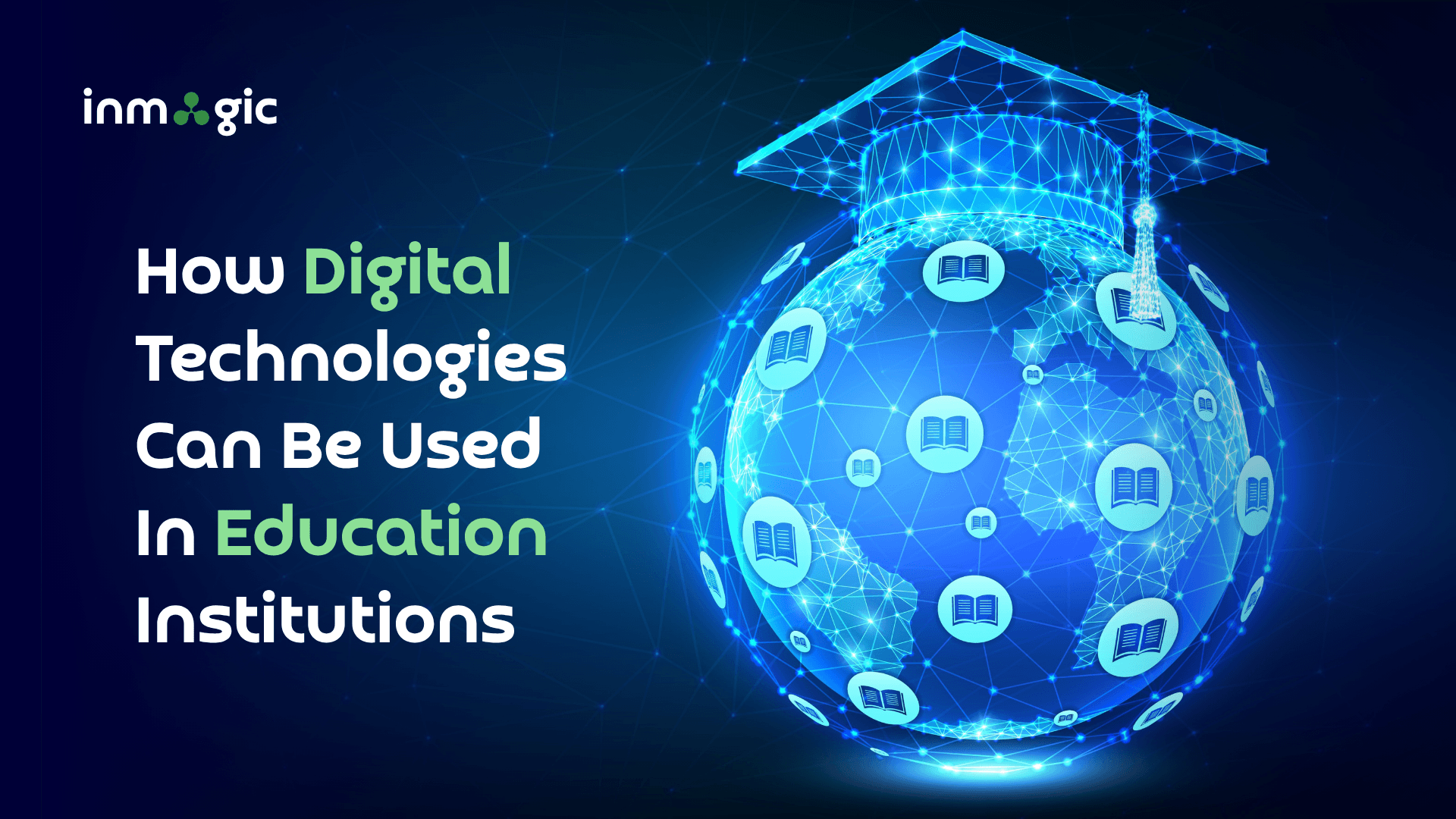
The global education landscape is no longer in a phase of “transition” it has entered a phase of permanent operational reality. By the end of 2026, the global EdTech market is projected to hit $214 billion, growing at a 14.5% compound annual growth rate. For Universities, Engineering Colleges, and Schools, the differentiator is no longer just “going digital”; it is about digital performance the ability to use adaptive technologies to increase student admissions and sustain deep engagement.
This guide provides an exhaustive analysis of the application of digital technologies in education, the specific need for digital technologies in education in the intelligence era, and a checklist of mandatory technologies that every modern institution must adopt to survive and lead.
What is Digital Technologies in Education?
To define what is digital technologies in education in 2026, we must look beyond mere hardware like tablets or smartboards. It is the integration of an intelligent system architecture that unifies pedagogy, administration, and student experience into a “Single Source of Truth.”
In essence, digital technologies in education refer to a sentient ecosystem of:
Intelligent Infrastructure
AI-native platforms that automate the student journey from prospect to alumnus.
Adaptive Pedagogical Tools
Software that identifies individual learning patterns and adjusts content delivery in real-time.
Scalable Administrative ERPs
Unified systems for billing automation, resource scheduling, and workforce management.
The Critical Need for Digital Technologies in Education
Why is there an urgent need for digital technologies in education today? The shift is driven by three primary forces:
The “AI-Native” Learner
Today’s UG and PG students are AI-native. Research indicates that 86% of students globally now use AI tools as a regular part of their learning process a jump from 66% just a year ago. If an institution doesn’t provide an AI-supported infrastructure, it appears obsolete to the modern applicant.
Competitive Admission Velocity
With the global “enrollment cliff” affecting higher education, colleges are in a fierce battle for high-quality leads. Digital technologies allow for “Zero-Click” admission inquiries and automated nurturing, reducing lead-to-enrollment time by up to 3x.
Operational Sustainability
Legacy brick-and-mortar models are becoming financially burdensome. Institutions that adopt comprehensive digital transformation strategies report an average of 40% cost savings through automated workflows and cloud-native scaling.
Mandatory Technologies in Education: The 2026 Checklist
For an educational institution to be considered “Global Standard” in 2026, the following technologies are no longer optional—they are foundational.
Artificial Intelligence (AI) and Agentic Workflows
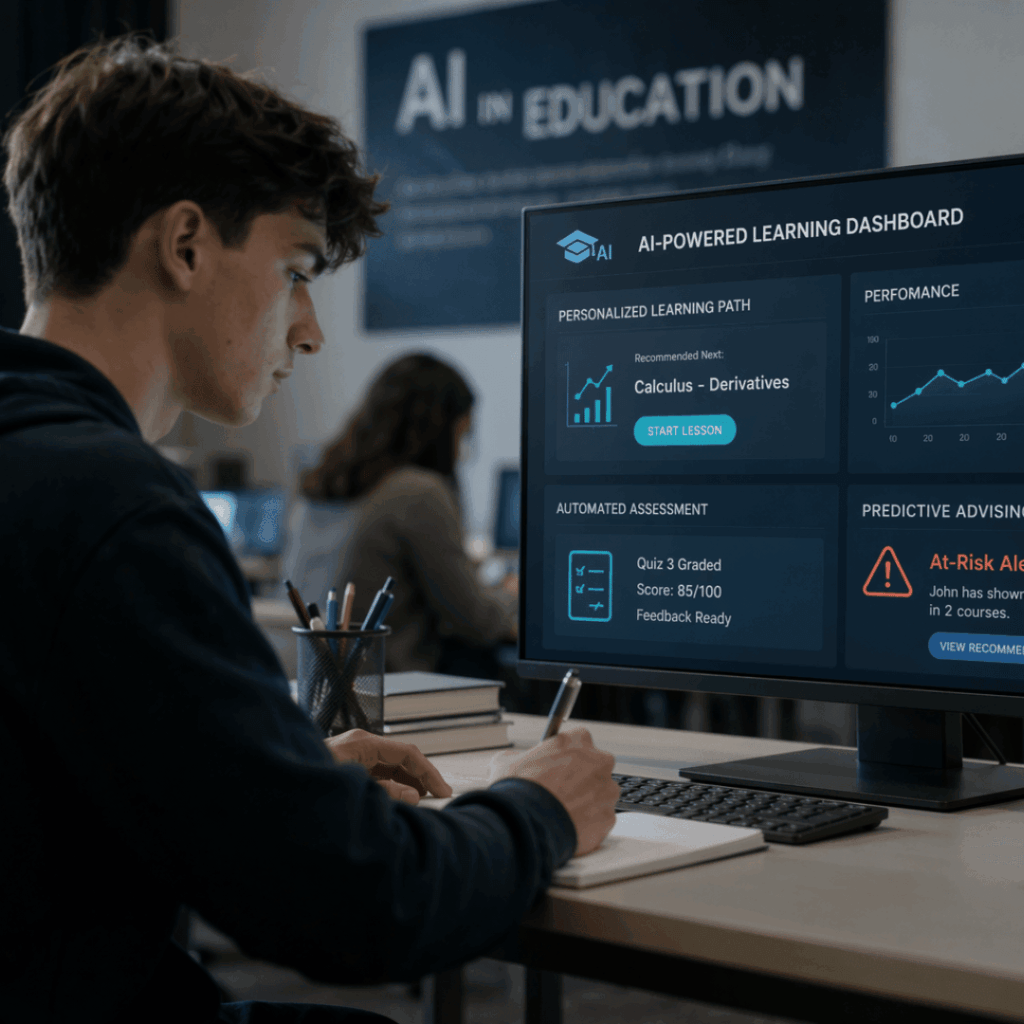
AI is the “Intelligence Layer” of the modern university. Its applications extend far beyond simple chatbots.
- Personalized Learning: Systems like Squirrel AI or custom AI/ML models analyze student performance with unprecedented accuracy, ensuring no learner is left behind.
- Automated Assessments: AI handles routine grading for UG/PG programs, allowing faculty to focus on high-value research and mentorship.
- Predictive Advising: AI flags “at-risk” students who show signs of disengagement before their grades drop, increasing retention rates by up to 15%.
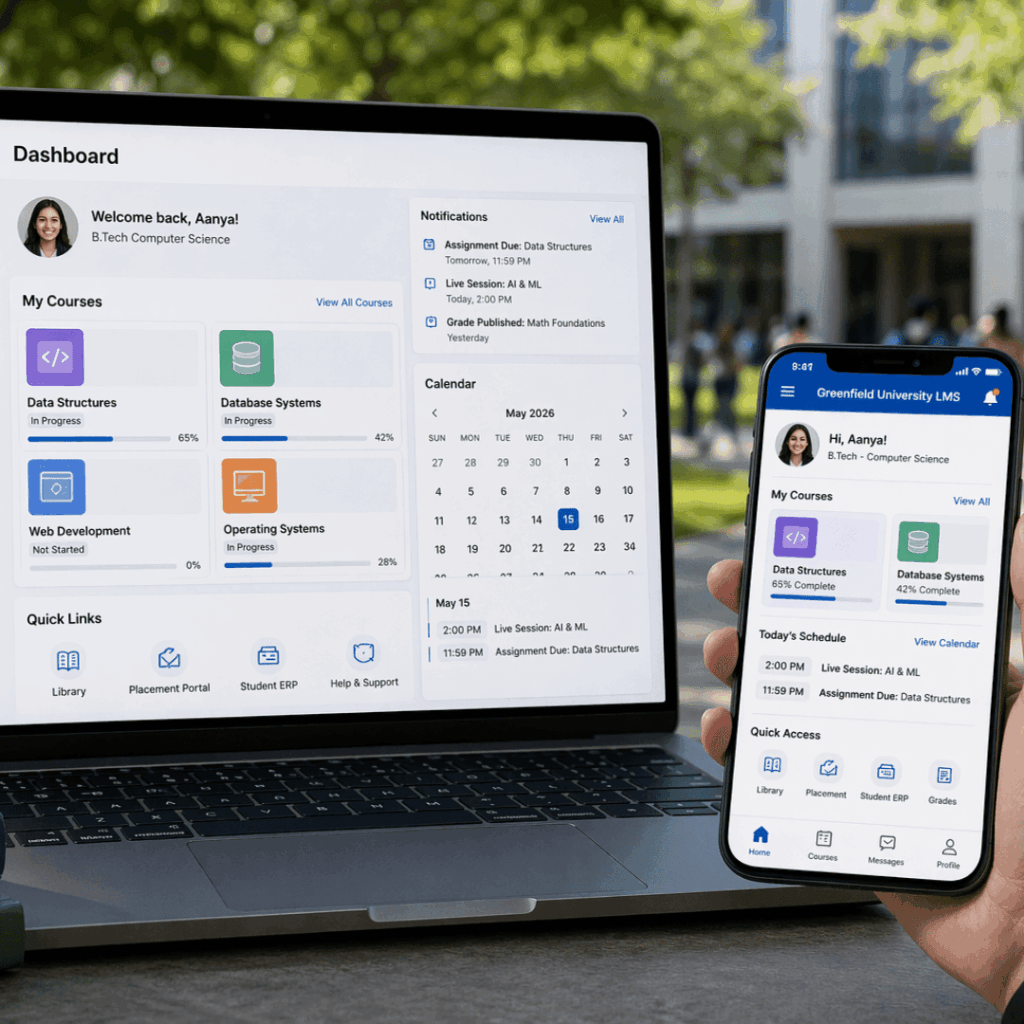
Advanced Learning Management Systems (LMS)
A modern LMS (like Moodle, Canvas, or bespoke Inmogic solutions) is the central hub of the campus. In 2026, the LMS must be:
- Interoperable: Capable of syncing data between the Student Information System (SIS), the(https://inmogic.com/crm-erp-app-development/), and placement portals.
- Mobile-First: 88% of college students find their smartphone “important” for academic work; thus, the LMS must provide a high-performance app experience.
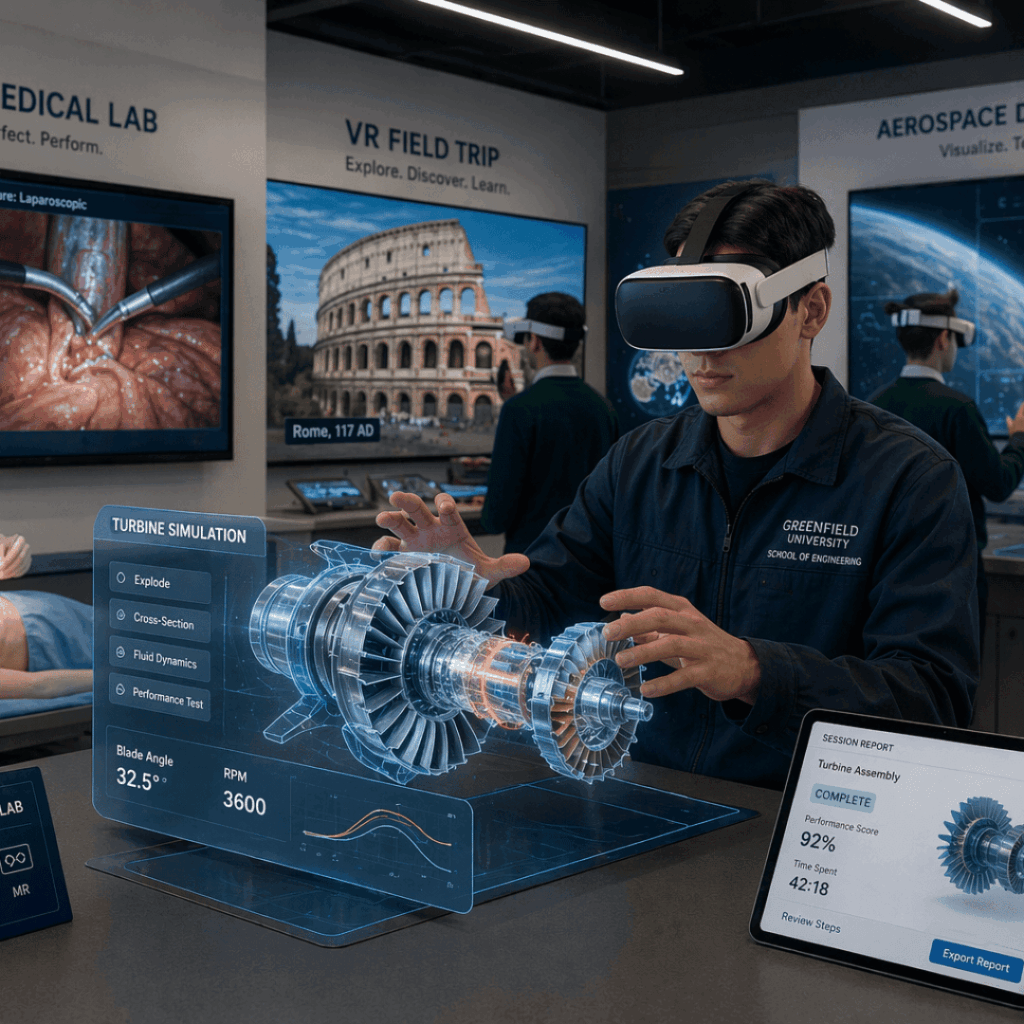
Immersive Technologies (VR/AR/MR)
Immersive tech provides experiential learning that traditional textbooks cannot match.
- Digital Twins for Engineering: Students can interact with virtual 3D models of complex turbines, semiconductors, or aerospace components.
- Virtual Medical Labs: Medical and nursing students practice high-stakes surgeries in risk-free, simulated environments.
- VR Field Trips: K-12 and Schooling institutions use VR to transport students to historical sites or outer space, boosting engagement by 2x.
Inclusive and Accessibility Tools
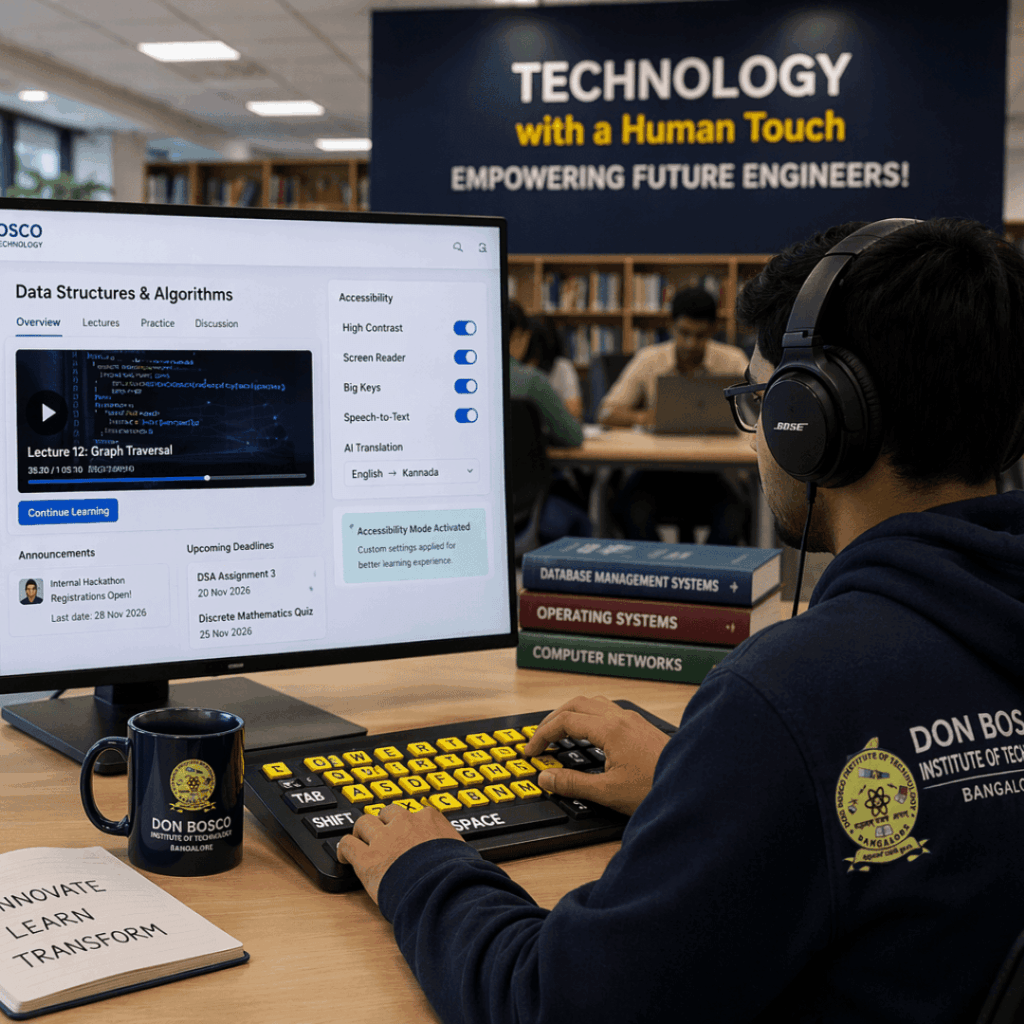
Inclusive technology is a legal and ethical mandate.
- Adaptive Hardware: Speech-to-text, screen readers, and big-key keyboards for students with special needs.
- AI Translation: Real-time translation for global UG/PG students, ensuring language is not a barrier to high-level research.
- Accessibility Compliance: By April 2026, legal deadlines in many regions will require all university websites to meet WCAG standards—a core focus of Inmogic’s design-to-code services.
Sector Focus: Higher Education (UG, PG, Engineering)
The application of digital technologies in education varies significantly by sector. While Schools focus on foundational literacy, Higher Education focuses on workforce readiness and research performance.
Technologies in School: Bridging the K-12 Divide
Technologies in school prioritize “STEAMED” learning and parent connectivity.
- Kommify for Engagement: Using our Broadcasting to send automated attendance alerts, fee reminders, and digital report cards directly to parents’ phones.
- Gamified Classrooms: Using tools like ClassDojo to turn learning into a collaborative game, which has been shown to increase participation by 40% in mathematics and science.
Sector Focus: Higher Education (UG, PG, Engineering)
The application of digital technologies in education varies significantly by sector. While Schools focus on foundational literacy, Higher Education focuses on workforce readiness and research performance.
Requirements for Engineering & PG Colleges:
- High-Performance Computing (HPC) on Cloud: To run complex simulations in VLSI, Data Science, or Biotech, colleges require scalable cloud infrastructure.
- Adaptive Research Portals: Online systems to manage Summer Research Fellowship Programs (SRFP) and Ph.D. applications, selecting top-tier talent based on automated rank data.
51% of global institutions now use blockchain for digital degrees and micro-credentials, making them tamper-proof and instantly verifiable by global employers.
How to Increase Admissions and Student Engagement
To achieve #1 market positioning, educational institutions must treat their digital presence as a revenue engine.
High-Converting Admission Funnels
Your website should not just be a brochure; it should be a lead-capture machine.
Local SEO: Optimizing campus-specific pages to rank in the “Top 3” for regional searches (e.g., “Best Engineering College in Bengaluru”).
AEO-Driven FAQs: Providing direct answers to common queries like “What is the B.Tech eligibility for 2026?” to capture voice search traffic.
Engagement Through "Credibility Orchestration"
Student engagement depends on trust.
Social Sentiment Analysis: Monitoring online conversations to manage the institution’s online reputation.
Interactive Short-Form Content: Using “native-feel” video and storytelling to connect with Gen Z and Gen Alpha students.
Challenges of Digital Technologies in Education
Understanding the challenges of digital technologies in education is crucial for risk mitigation.
- The Stability Paradox: Many institutions rush into AI while their foundational systems (like Identity Access Management – IAM) are unstable. Without a stable digital backbone, AI initiatives fail.
- Educator Adaptation: 38% of digital adoption challenges stem from insufficient faculty training. Cultural change is just as important as technical deployment.
- Data Sovereignty and Security: Protecting sensitive student data against ransomware is a paramount concern in 2026. Institutions must implement “Zero-Trust” architectures.
Dominating the Search Landscape: SEO, AEO, and GEO
To rank at #1 across all platforms, your content strategy must be three-dimensional.
| Strategy | Primary Goal | Inmogic's Approach |
|---|---|---|
| Traditional SEO | Rank on Google’s organic search results (the classic “10 blue links”). | Inmogic implements advanced SEO services including on-page optimization, technical SEO, and mobile-first website architecture to improve search rankings and organic visibility. |
| Answer Engine Optimization (AEO) | Appear in Featured Snippets, People Also Ask (PAA), and voice search results. | Inmogic structures content using FAQ schema markup, optimized headings, and concise answer blocks so search engines can easily extract answers for snippets and voice assistants. |
| Generative Engine Optimization (GEO) | Get cited in AI-powered search results like ChatGPT, Gemini, and Google AI Overviews. | Through authoritative content marketing, structured data, and strong E-E-A-T signals, Inmogic creates credible resources that AI engines and generative search platforms are more likely to reference. |
Why Education Needs Inmogic: The Integrated Solution
Inmogic is not just an agency; we are a high-performance engine for your digital journey. We help you transition from “traffic chasing” to “audience ownership” .
| Feature | Institutional Benefit | Inmogic Solution |
|---|---|---|
| Admission Funnels | Accelerate student enrollment and reduce admission cycle time with targeted lead generation. | Inmogic builds high-converting admission funnels using Search Engine Marketing (SEM) , optimized landing pages, and conversion tracking. |
| Student Communication | Enable continuous engagement with students and parents through automated messaging. | Using Inmogic Broadcasting Solutions , institutions can manage WhatsApp communication, bulk messaging, and automated alerts. |
| Workspace Management | Improve operational efficiency and streamline campus administration processes. | Through Billing & Financial Automation , Inmogic simplifies payment processing and financial workflows. |
| Custom Platforms | Eliminate limitations of generic software with platforms built specifically for institutional needs. | With Custom Development Services , Inmogic builds scalable digital platforms tailored for admissions and operations. |
Conclusion: Lead the Intelligence Era
The future of the educational industry belongs to institutions that view technology not as an expense, but as a strategic asset for growth. By mastering the application of digital technologies in education, your institution can unlock unprecedented scalability, drive admissions, and deliver the personalized learning experiences that define the digital university.
Inmogic is here to deliver the implemented, measurable change your institution needs.
Ready to modernize your institution’s digital identity?(https://inmogic.com/contact-us/) or explore our Education & eLearning solutions to start your journey toward #1 positioning in the 2026 landscape.
Frequently Asked Questions
A unified cloud-based ecosystem that integrates an LMS, a student CRM, and AI-driven predictive analytics to provide a "Single Source of Truth" for student success.
By utilizing high-converting digital funnels,(https://inmogic.com/search-engine-marketing/), and automated WhatsApp engagement (Kommify) to nurture prospects 24/7.
The top challenges include technical infrastructure instability, the need for educator professional development, and ensuring data privacy and cybersecurity.